

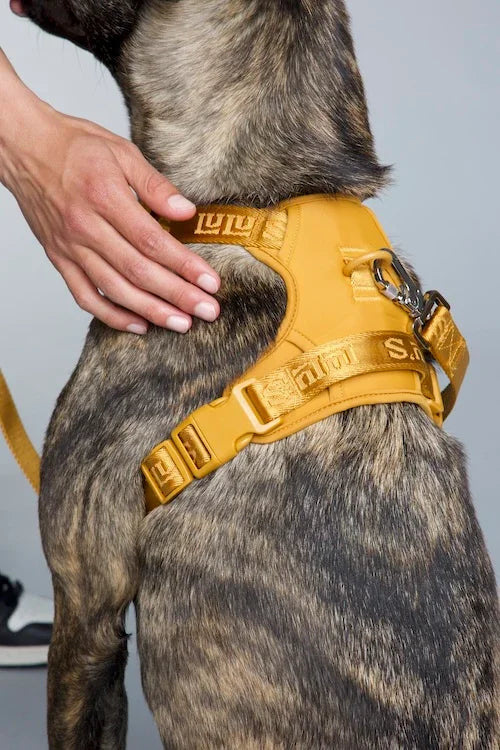
A great walk starts with a harness that fits. Get three things right, the size, the fit and the leash clip, and your dog can move comfortably while you enjoy the walk together. Here’s our simple guide to choosing a dog harness, plus a quick fit checklist for the first time your pup tries one on.
Harness or collar: which is better for walks?
A collar is perfect for ID tags, but when a dog pulls, the pressure lands on the neck. A harness spreads it across the chest and shoulders instead. That’s why many owners choose a harness for everyday walks, especially for puppies, small breeds, flat-faced breeds like French Bulldogs and Pugs, and dogs who tend to pull.
You don’t have to pick just one. Plenty of owners keep a light collar on for ID tags and clip the leash to the harness. If your dog has a neck, back or breathing condition, ask your vet which setup suits them best.
How to measure your dog for a harness
Grab a soft tape measure and a few treats, and measure with your dog standing.
Neck
Measure around the base of the neck, where a collar usually sits.
Chest
Measure around the widest part of the chest, just behind the front legs.
Write down both numbers and compare them with our harness size chart. Choose the size that fits both measurements. Weight alone isn’t a reliable guide: two dogs of the same weight can have very different builds.
If your dog fits more than one size
Our size ranges overlap, so your dog’s measurements may fit two sizes. That’s normal. Choose the size where both the neck and chest measurements fit, and where you can adjust the harness to a snug, secure fit. Not sure? Email us at hello@lulufromcali.com with your dog’s neck and chest measurements, and we’ll help you choose.
Sizing a harness for a puppy
Choose the size that fits your puppy’s measurements today. A harness should fit securely now, not be bought big to grow into. Puppies grow quickly, so remeasure regularly, adjust the straps as needed, and move up a size once the current one no longer fits.
How to check that a harness fits properly
A good fit is snug and secure, but never tight. Check it in three ways.
The two-finger check
You should be able to slide two fingers flat under each strap. It’s a helpful starting point, but it’s only one part of checking the fit.
Movement
Walk a few steps and watch your dog move. The shoulders and front legs should move freely, and the straps shouldn’t press into the armpits.
Security
Gently tug the harness in a few directions. It shouldn’t slide over the head or shift far to one side. After the first few walks, check under the front legs and around the chest for rubbing or redness.
Re-check the fit after grooming, whenever your dog’s weight changes, and regularly while a puppy is growing.
Front clip or back clip: which D-ring should you use?
Our adjustable dog harness has two places to attach the leash, a D-ring on the back and one on the chest, so you can choose the one that suits the walk.
Back D-ring: everyday walks
The back ring is easy to clip on and suits relaxed strolls with dogs who already walk nicely on a leash.
Front D-ring: help with pulling
Some owners find the front ring helps them manage pulling, because the leash attaches at the chest rather than the back. It works best alongside consistent loose-leash training, such as rewarding your dog for walking beside you. If pulling continues, a professional trainer can help.
Our harness also has a reinforced grab handle on the back, which gives you something to hold when you need to guide your dog close.
Choosing a harness for your dog and your walks
Small dogs and puppies
Look for a lightweight harness, sized to your dog’s current neck and chest measurements.
Dogs who pull
Try the front D-ring, together with regular loose-leash training.
Calm strollers
The back D-ring keeps things simple: clip on and go.
Hikes and longer walks
Choose a lightweight, breathable harness, and check the fit again after the first long outing.
Comfort and materials
Our harness is made from double-layer breathable mesh, similar to the ventilated mesh used in athletic shoes, and it’s designed to feel lightweight. The straps adjust for a custom fit, and the quick-release buckle makes it easy to put on and take off.
Whichever harness you choose, check regularly that the buckles click closed, the straps lie flat, and the hardware shows no cracks or fraying. Our harness doesn’t have reflective trim, so for early-morning or evening walks, consider adding a clip-on light.
Going hands-free on your walks
Hands-free walking works best once your dog walks calmly on a loose leash. Until then, practice with a handheld leash.
Three ways to use the leash
With our hands-free leash & belt set, the leash can be used three ways:
- Clipped to the belt worn at your waist
- Clipped to the belt worn crossbody
- Unclipped and used as a classic handheld leash
Tips for walking hands-free
- Start in quiet places, like your street or a calm park path, before trying busier routes.
- Near traffic, at crossings and around other dogs, keep a hand on the leash so you can guide your dog right away.
- Stay alert to your surroundings. Avoid walking hands-free while pushing a stroller, riding a bike or using a scooter.
- If your dog lunges or pulls strongly, switch back to a handheld leash.
Quick dog harness fit checklist
- Neck and chest measured with your dog standing
- Both measurements fit the size you chose
- The harness fits securely now, with no room left “to grow into”
- Two fingers slide under each strap
- Shoulders and legs move freely
- The harness doesn’t slip over the head when gently tugged
- No rubbing after the first few walks
- The right D-ring for the walk: back for everyday, front alongside training for pulling
Dog harness FAQ
Should my dog wear a harness at home?
We recommend taking the harness off at home and overnight. It gives your dog’s coat a break and keeps the straps from catching on furniture or crates.
What size harness does a puppy need?
The size that fits your puppy’s neck and chest measurements right now. Remeasure regularly as your puppy grows, and move up a size when the current harness no longer fits. For more first-weeks advice, read our tips for new puppy owners.
Can my dog wear a harness and a collar together?
Yes. Many owners keep a light collar on for ID tags and clip the leash to the harness.
Measure, check the fit, choose your clip, and enjoy the walk. You’ll find your dog’s size on our harness size chart.

Leave a Comment
All comments are moderated before being published.
This site is protected by hCaptcha and the hCaptcha Privacy Policy and Terms of Service apply.