


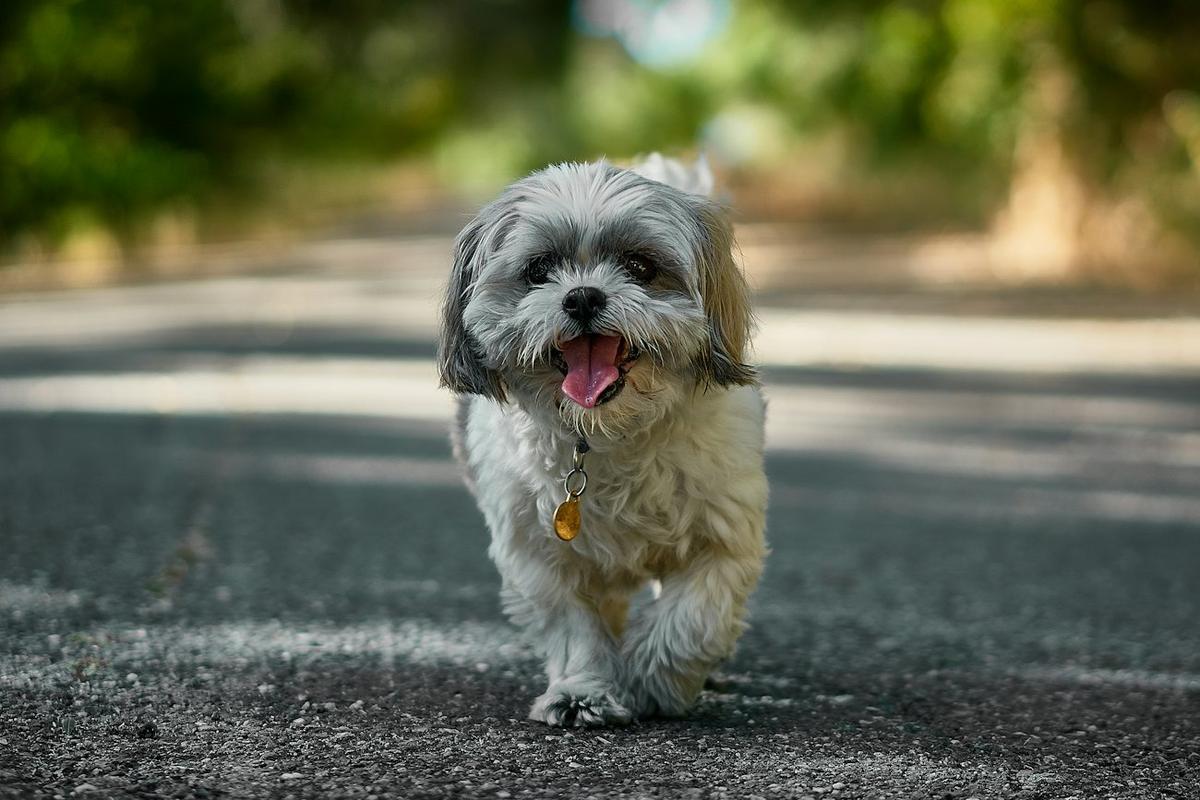
Your dog is trotting happily down the sidewalk, tail up, tongue out, totally unbothered. So the pavement must be fine, right? Not always. Dogs are surprisingly good at walking through discomfort, and paw-pad burns don't always show up right away. Here's what's really happening underfoot, and how to keep every summer walk a happy one.
Why dogs don't complain
A dog who keeps walking isn't proof that their paws are okay. A few things work against the warning signs:
- They may keep going anyway. Some dogs keep walking despite discomfort, and pain in dogs can show up in subtle ways that are easy to miss (Canadian Veterinary Medical Association).
- They're having too much fun. A walk is the best part of the day. Excited dogs push through small discomforts, and we miss the hints.
- Burns can show up later. Blisters can appear and break open a few days after the walk (PetMD).
How hot does pavement really get?
Hotter than you'd guess. Your weather app measures the air in the shade. Your dog walks on dark asphalt that has been soaking up sun all day.

The peak temperature of asphalt in full sun, measured in a Phoenix study of pavement burns. In the shade, asphalt peaked near 109°F (Harrington et al., 1995, summarized in Burns & Trauma, 2019).
The air temperature at which the AKC suggests extra caution, especially when pavement hasn't had a chance to cool (AKC).
Tough paws, but not heatproof
Paw pads are built for grip and cushioning, with a thick outer layer of skin over a soft, fat-rich cushion (Biology Open). They insulate the foot (VCA), but insulation only slows heat down. On hot ground, discomfort is a warning that fades once paws cool off. A burn is real tissue damage that needs time, and sometimes a vet, to heal.
Signs to watch for

On the walk
- Lifting paws or walking faster
- Pulling toward grass or shade
- Limping
- Licking or chewing the feet
- Pads that look redder or darker
Hours to days later
- Blisters that fill, then break open
- Peeling pads
- Raw, red or bleeding spots
- Not wanting to walk
- Swelling or discharge
How to prevent paw burns
- Do the 7-second test. Press the back of your hand on the pavement. If you can't hold it there comfortably for seven seconds, it's too hot for paws. It's a quick precaution, not a guarantee, so keep watching your dog too (FOUR PAWS).
- Walk early or late. Mornings and evenings are kindest to paws.
- Choose grass and shade. Shade alone can cut pavement temperatures dramatically.
- Keep hot-day walks short. Save the long adventures for cooler days.
- Ease into summer. Pads that haven't touched much pavement since last year need time to toughen up (AKC).
- Keep pads moisturized. Dry, cracked pads are more vulnerable.
- Consider booties. Choose a snug, non-slip fit and give your dog time to get used to them.

Think your dog's paws are burned?
Do this right away
- Get off the heat. Move to grass or shade.
- Cool the paw gently. Rinse or soak it in cool, not cold, water to soothe it (VCA; Garden State Veterinary Services).
- Skip the ice. No ice directly on the burn, and no hydrogen peroxide or alcohol.
- Stop the licking. Cover the paw loosely with a clean wrap. Some dogs need a cone.
- Call your vet. Contact your veterinarian about any suspected paw burn, even if it looks mild. Go right away if a pad is blistered, raw, bleeding, peeling or discolored, or if your dog won't put weight on the foot.
Ask your vet before putting any cream or ointment on the paw. Mild injuries may heal in 7 to 10 days, while deeper burns can take weeks (PetMD).
Hot pavement FAQ
How hot is too hot to walk my dog?
Use your hand, not just the forecast. If the pavement fails the 7-second test, walk on grass, find shade, or wait until it cools. Even if it passes, keep hot-day walks short and watch your dog.
My dog seems fine after a hot walk. Should I still check?
Yes. Look at the pads that evening and again the next day, since some burns take a while to show.
Can I put ice on a burned paw?
No. Use cool, not cold, water instead, and call your vet.
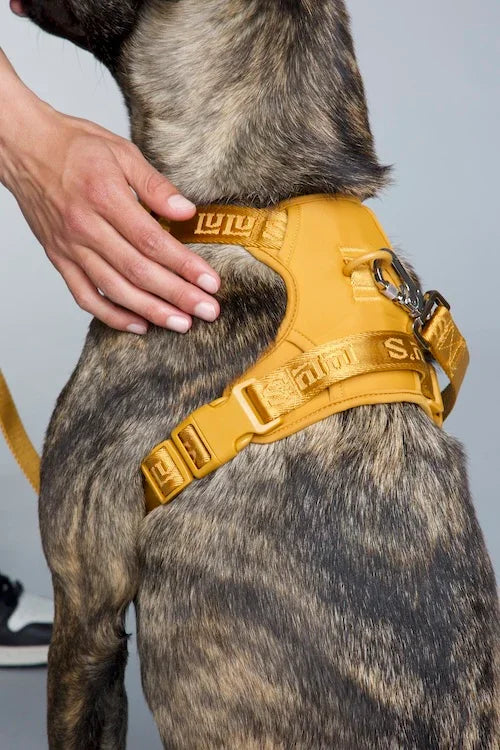
Your dog will never ask you to check the pavement. That's exactly why you should. For more warm-weather ideas, read our guide to keeping your dog active in California heat. If your dog is new to harness walks, our guide to choosing the right dog harness covers fit and comfort, and our front and back clip dog harness has a breathable mesh lining.
This article is for general information and isn't a substitute for advice from your veterinarian.
- Kowal-Vern et al., "'Streets of Fire' revisited: contact burns," Burns & Trauma, 2019
- American Kennel Club, "Hot Pavement and Dog Paws"
- PetMD, "Paw Pad Burns on Dogs: What to Do"
- VCA Animal Hospitals, "First Aid for Torn or Injured Foot Pads in Dogs"
- Garden State Veterinary Services, "First Aid for Dog Paw Pad Burns"
- FOUR PAWS USA, "Hot Asphalt: A Danger to Your Dog's Paws"
- Miao et al., "How does the canine paw pad attenuate ground impacts?" Biology Open, 2017
- Grubb, "What Are They Hiding? Pain Assessment in Dogs and Cats," CVMA
Featured photo: Nikolay Tchaouchev on Unsplash.


Leave a Comment
All comments are moderated before being published.
This site is protected by hCaptcha and the hCaptcha Privacy Policy and Terms of Service apply.