



Hands-free dog walking means clipping your dog's leash to a belt you wear, around your waist or crossbody, so your hands stay free. The same leash can also be unclipped and used handheld. Here's how the three ways compare, when each one works best, and how to set up a hands-free leash.

Coffee in one hand, phone in the other, and a happy pup leading the way. If that sounds like your morning walk, hands-free dog walking might be your new favorite thing. But "hands-free" can mean a few different setups, and each one feels a little different on the sidewalk, the park or the beach path.
Three ways to walk, side by side
A hands-free setup has two parts: a walking belt you wear and a leash that clips to it. Our Walking Belt adjusts from 29" to 53" and is worn two ways, around the waist or crossbody. Our Hands-Free Dog Leash adds a third option: unclip it from the belt and it becomes a classic handheld leash.
| Around the waist | Crossbody | Handheld | |
|---|---|---|---|
| How it works | Belt around your waist, leash clipped to it | Belt worn over one shoulder and across your chest, leash clipped to it | Leash on its own, no belt |
| Your hands | Free | Free | One hand on the leash |
| Feels like | Easy and natural, with the leash at your hip | A secure fit across the body | The classic, familiar walk |
| Great for | Relaxed strolls, errands, coffee runs | Longer walks | Busy crossings, crowds, vet visits, a new dog |
| Leash length | 41.5"–59.5" attached to the belt | 41.5"–59.5" attached to the belt | 32.5"–50" |
Around the waist
Often called a waist dog leash, this is the setup most people picture when they hear "hands-free." With the leash clipped to the belt at your waist, your hands stay free for coffee, a phone or picking up after your dog.
Crossbody
For a crossbody dog leash setup, wear the belt over your shoulder and across your chest. It gives a secure, hands-free fit that many people like for longer walks. It's also a nice option if a waist belt doesn't feel right with what you're wearing.
Handheld
Sometimes you simply want the leash in your hand. Unclip it from the belt and connect that clip to the ring on the leash itself to form a handle. Handheld is a smart choice anywhere you want a firmer hold, like busy streets or crowded markets.

Which style fits your walk?
- Morning coffee run or errands: around the waist keeps both hands free for your latte, your phone and your keys.
- Longer walks: many people like crossbody for a secure, hands-free fit over longer distances.
- Busy sidewalks and crossings: switch to handheld for a firmer hold, then clip back on once you're clear.
- A puppy or a new rescue still learning the leash: start handheld while you practice walking together, then try hands-free once walks feel calm.
The best part is that you don't have to choose just one. The same leash works all three ways, so you can switch as your walk changes.
Is hands-free walking safe?
For most adults walking a dog who already walks calmly on a loose leash, hands-free walking is easy and enjoyable. Three basics matter most:
- Walking nicely comes first. No leash replaces training. The UC Davis veterinary behavior service recommends reward-based practice: start somewhere quiet and reward your dog for walking beside you, then slowly add distance and distractions (UC Davis).
- Know your dog's strength. A dog that lunges suddenly can pull a smaller adult, a child or someone frail off balance (Whole Dog Journal).
- Go handheld when it counts. Near traffic, in crowds, or around other dogs, a hand on the leash gives you a firmer hold.
How to set up a hands-free leash
- Put on the belt. Wear it around your waist or crossbody and adjust it for a comfortable fit. Our dog walking belt guide covers sizing in detail.
- Find the right clip. Both leash clips look the same. The clip closest to the ring on the leash attaches to the belt.
- Clip on your dog. The clip at the opposite end attaches to your dog's harness or collar. Not sure which harness ring to use? Our guide to choosing the right dog harness covers sizing, fit and the front and back clips.
- Add your waste bag holder to the belt. Clip the Waste Bag Pouch to the ring on the belt, next to the leash. On the leash ring it can swing as your dog moves and may touch the ground.
- Switching to handheld? Unclip the leash from the belt, connect that clip to the ring on the leash to form a handle, and move the waste bag holder to the leash ring.
Carrying your phone? The Horizontal Pouch attaches to the walking belt with two Velcro straps, so there's no need to thread the belt through it.
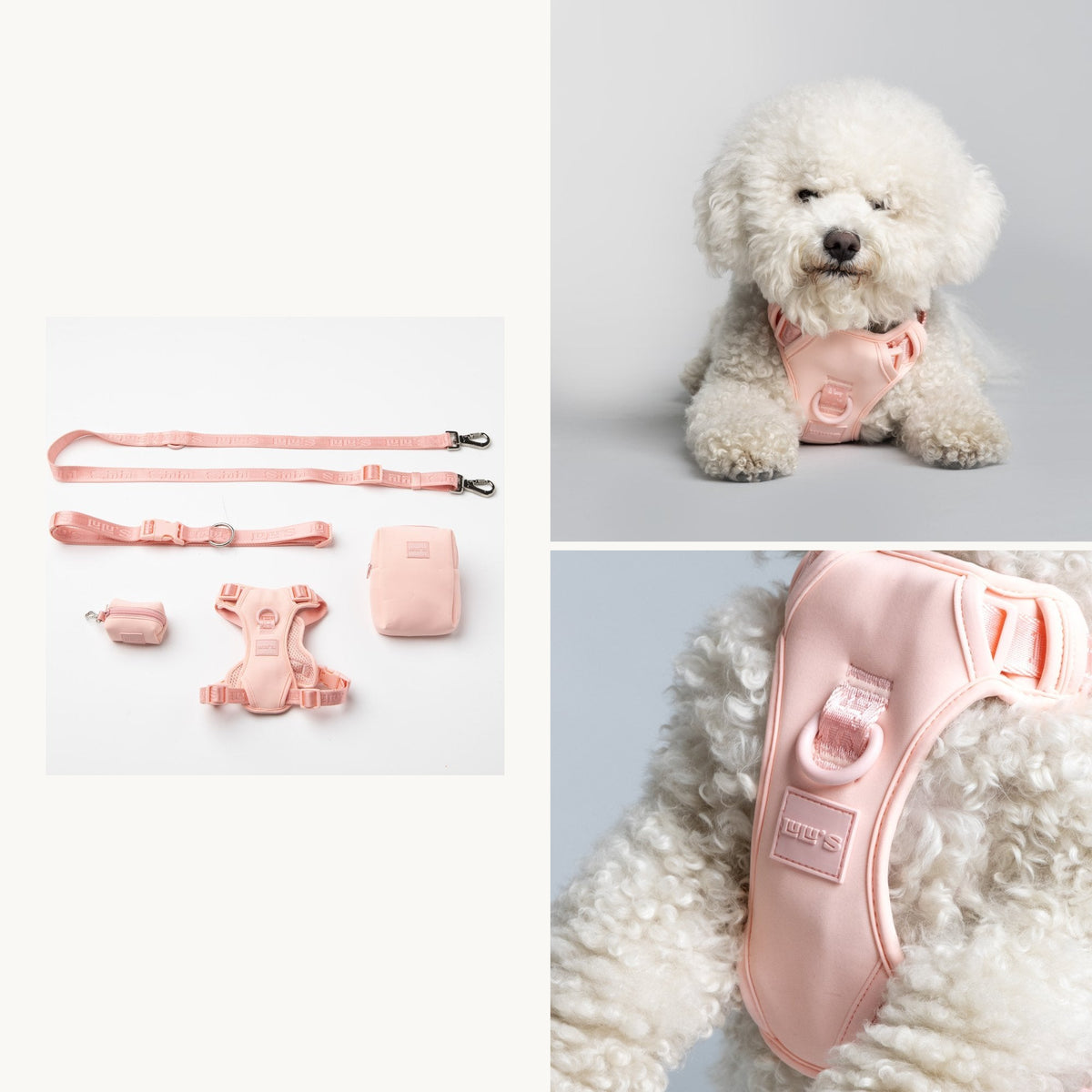
Want everything in one matching color? The Leash & Belt Set pairs the leash and walking belt, and the Complete Hands-Free Dog Walking Set adds a harness and a waste bag holder. Compare our hands-free walking sets.
Hands-free dog walking FAQ
Is a hands-free leash good for small dogs?
Yes. Our Thin leash (0.75" wide) is a lightweight option that can be especially comfortable for small dogs. Pair it with a harness chosen by your dog's neck and chest measurements; our sizes start at XS. The Thick leash (1" wide) has a sturdier feel in the hand.
Waist or crossbody: which is more comfortable?
It's personal. The same belt works both ways, so try each on your next walk and see what feels best.
What waist size does the walking belt fit?
Our walking belt adjusts from 29" to 53", around the waist or crossbody.
Can I walk two dogs hands-free?
You can attach more than one leash to our walking belt. Try it only when both dogs walk calmly on a leash, and keep a hand ready near traffic and other dogs.
Happy walking, from our pack to yours.
This article is for general information and isn't a substitute for advice from your veterinarian.
Sources
- Loose Leash Walking (UC Davis Clinical Animal Behavior Service)
- Hands-Free Dog Leashes (Pat Miller, CBCC-KA, CPDT-KA, Whole Dog Journal)


Leave a Comment
All comments are moderated before being published.
This site is protected by hCaptcha and the hCaptcha Privacy Policy and Terms of Service apply.